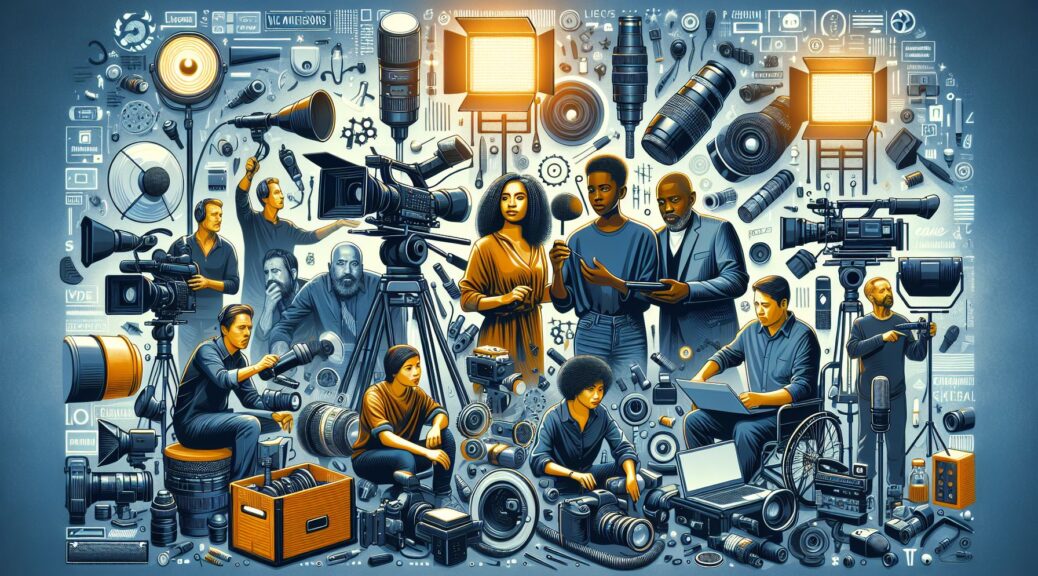
As a videographer, your video production quality can make or break your work. A lot of factors come into play, from the equipment you use, the filming techniques you employ, to the editing software you choose. Keeping an eye on these variables is key to mastering the art of video production.
This guide takes you through three main sections of video production: pre-production, production, and post-production. In each section, we’ll focus on how to improve video quality, sound quality, and overall production levels.
Pre-production
Defining the Concept and Planning
Every video starts with an idea. Once you’ve defined your idea, it’s time to plan. Sketch out your scenes, think about the shots you need, plan your locations, and consider the logistics – this stage is crucial for the success of your final product.
Equipment Evaluation
Before you start shooting, make sure you evaluate your equipment. Ensure your camera settings are optimal for your shooting conditions. Depending on your budget and requirements, you may need additional equipment such as microphones for better audio quality, lighting kits, and stabilizers.
Production
Framing and Composition
During the shooting process, framing and composition play a significant role in the overall quality of the video. Use the Rule of Thirds to guide your framing and create balanced, appealing visuals.
Optimal Lighting and Sound
Good lighting is essential in capturing high-quality videos. Depending on your location and time, you might need artificial lighting. Pay attention to the direction, intensity and quality of light.
Similarly, high-quality audio is vital to keep your viewers engaged. A high-quality microphone, a quiet environment, the correct placement of the microphone will all contribute to better sound recording.
Multi-angle Shooting
For a more dynamic and engaging video, shoot your scenes from different angles. Wide shots, medium shots, close-ups, different perspectives – they all add interest and depth to your footage.
Post-production
Choose the Right Software
Selecting an editing software that fits your needs is essential. Adobe Premiere Pro, Final Cut Pro, DaVinci Resolve are some of the industry standards. However, if you’re just starting out, there are plenty of beginner-friendly options like iMovie and Filmora.
Refining Your Footage
The role of editing in video production cannot be overstated. This is where you trim your footage, add transitions, special effects, and refine the audio. Always keep your target audience in mind when editing, making sure that your video is engaging and follows a coherent storyline.
Colour Correction and Grading
Colour correction and grading can have a significant impact on your final video. Correcting the colours of your footage brings it closer to what the human eye sees. Grading is the process of setting the mood and style of your video through colours.
Conclusion
Mastering video production is an ongoing process, but hopefully, this guide provides a clear path to improving your video quality. Keep experimenting, learning new techniques, and always be open to feedback. Remember, the goal is not only to create visually pleasing videos but to tell stories that engage and captivate your audience. With practice and patience, you’ll continually refine your art.
And last but not least, never forget that the core of every great video is a great story. Prioritize storytelling as much as the technical aspects of videography, and you’re on your way to mastering the art of video production. Good luck!